Building Wealth Through Innovation & Strategy
.
About Us
Livestock farming is the practice of raising animals for their products. It includes activities such as breeding, feeding, and caring for the animals. Animals are typically kept in large pastures or pens and fed a balanced diet to remain healthy and productive.
Typical work completed on a farm includes feeding, cleaning pens, providing medical care for the animals, milking cows and goats, shearing sheep for wool, and collecting eggs. In addition, farmers must also monitor the health of their animals and make sure that they are safe from predators and diseases.
Vision & Mission
To be a globally known and respected wealth creator with an emphasis on safe investing strategies for all our farmers.
Mission Statement
We strive to provide our farmers with the best in wealth management by offering investments in multi-class farming from global markets. Our goal at Cloud farming is to generate a consistent monthly return on investment of 10% by trading in a few specialized markets.
Mission Statement
We strive to provide our farmers with the best in wealth management by offering investments in multi-class farming from global markets. Our goal at Cloud farming is to generate a consistent monthly return on investment of 10% by trading in a few specialized markets.
How we do
In the face of reduced land resources, animals are increasingly being kept in smaller spaces referred to as Zero grazing and being provided with all their feed and water requirements. The zero-grazing system requires high labor and capital inputs. Cattle are confined in a cattle shed and fed on arable fodder crops and feed supplements carried to them.
The forage is chopped and given to the cattle in a feed trough. The cattle are milked in a dairy, and the calves are reared in calf pens. The cattle are watered inside the shed, hence the need for piped water.
The forage is chopped and given to the cattle in a feed trough. The cattle are milked in a dairy, and the calves are reared in calf pens. The cattle are watered inside the shed, hence the need for piped water.
Our Strategy
- Mechanization of animal feed production to increase the area under them, reduce production costs and employ more people.
- Improving harvesting methods to ensure the availability of animal feed during dry weather.
- Extending the harvest season of animal-grown feeds by introducing new cultivars.
- Reducing harvest losses of fodder crops that grow rapidly in wet weather and dry up in dry weather, rendering them unusable.
- Development of disease-resistant fodder crops to reduce losses to diseases etc., and premature crop loss.
- Increasing the employment opportunities for women on the farms for suitable operations for gender equality.
Our Investment Plans
In our settlement scheme, we participate in Dairy farming, Poulty farming and goat Keeping for Milk production
Dairy Farming
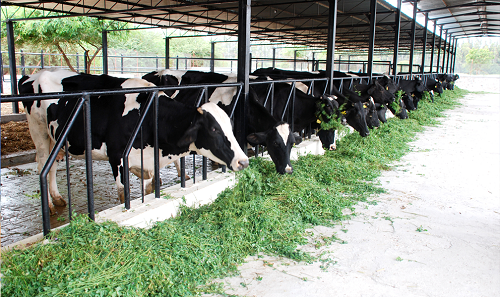
Milk production in India is dominated by small and marginal landholding farmers and by landless labourers who, in aggregate, own about 70 percent of the national milch animal herd (Gupta, 1983). As crop production on 78 percent of the agricultural land still depends on rain, it is prone to both drought and floods, rendering agricultural income uncertain for most farmers. Shackled to subsistence production as a result of a shortage of finance and credit facilities, these farmers become entangled in a strangling debt cycle. The combination of an unfavourable land: person ratio and fragmented landholdings makes it difficult to support large families on crop income alone. It is not surprising that the small farmer and the landless labourer are more often than not victims of moneylenders (Zuvakis, 1979) and of natural calamities. Dairying, as a subsidiary source of income, is a real relief to most of these weaker groups in society. Often one or two milch animals enable these farmers to generate sufficient additional income to break the vicious subsistence agricultural-debt cycle.
Goat Farming
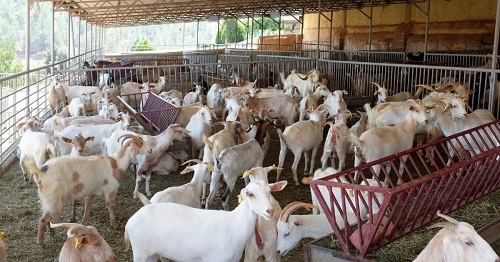
Meat goat farming in Kenya is becoming popular day by day. This is because goats are hardy and can be kept even in dry areas. Most farmers venture into meat goat rearing as a source of income from the sale of extra kids and culled adults. This is because goats are prolific compared to cows. They have a short gestation period, high chances of twinning and requires less space and feed less than cows. They are also much easier to invest in considering the initial capital investment and time you need to attend to them. They are generally browsers, if you plant more of fodder trees you are good to go.
There following are the common breeds suited for commercial and profitable goat farming:
There following are the common breeds suited for commercial and profitable goat farming:
- Small East African Goat
- Galla Goat
- Anglo-Nubians
- German Alpine
- Toggenburg
- Saanen
Poultry Farming
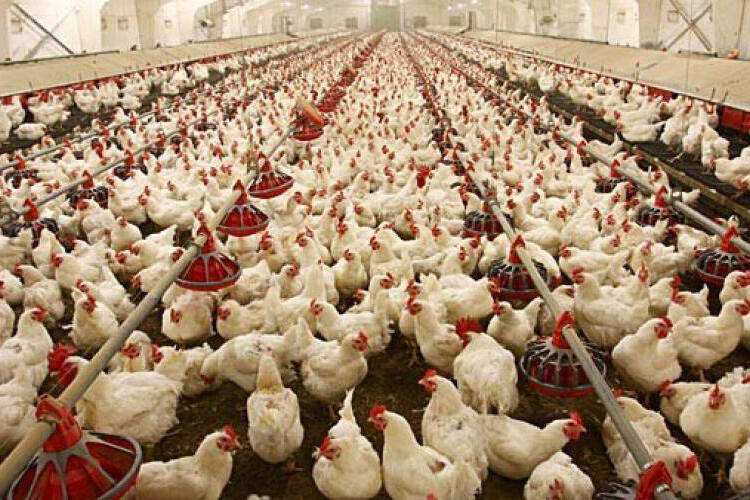
Poultry India, an international exhibition for the poultry industry just concluded the 14th Edition at Hitex Exhibition Centre, Hyderabad, Telangana, India & Knowledge Day Technical Seminal at Novotel, Hitech City, Hyderabad, Telangana. The Exhibition features the most innovative and reputed companies across the continent from the poultry sector to showcase their businesses and interact with potential partners, clients and investors. This event provides valuable information about poultry industry, poultry feeds, poultry equipment’s, technology, chicken breeders, Egg farming, poultry nutrition, animal health and international poultry production. It also offers latest advances in poultry research, science and technology like cages and feed milling importance.
It provides advanced knowledge and understanding of poultry industry via scientific forums, trainings and career opportunities in the Poultry Industry. Poultry India exhibition has reached a pinnacle where it is a one-stop forum for the Indian Poultry industry to experience 'live' display of the products and services to the right decision makers of international companies and reach to a wide global market.
It provides advanced knowledge and understanding of poultry industry via scientific forums, trainings and career opportunities in the Poultry Industry. Poultry India exhibition has reached a pinnacle where it is a one-stop forum for the Indian Poultry industry to experience 'live' display of the products and services to the right decision makers of international companies and reach to a wide global market.
Risk Management
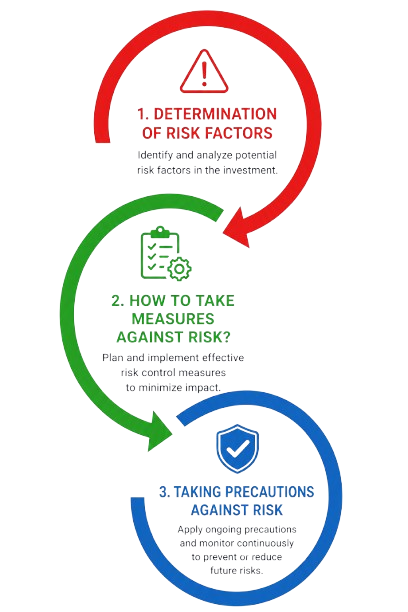
Beyond day-to-day operations, effective financial planning is a cornerstone of risk mitigation in livestock farming. Establishing and maintaining an emergency fund provides a financial safety net for unexpected expenses, such as veterinary emergencies or sudden fluctuations in market prices. Adequate insurance coverage for both livestock and property is crucial to protect the farm from unforeseen events, such as disease outbreaks or natural disasters.
Farmers should regularly reassess and adjust their financial plans based on changing circumstances and market conditions. This includes evaluating production costs, market trends, and potential risks to ensure that the farm remains financially resilient.
Exploring government assistance programs and grants can also provide additional support during challenging times. A well-thought-out financial strategy not only helps navigate immediate challenges but also positions the farm for long-term sustainability and success.
Farmers should regularly reassess and adjust their financial plans based on changing circumstances and market conditions. This includes evaluating production costs, market trends, and potential risks to ensure that the farm remains financially resilient.
Exploring government assistance programs and grants can also provide additional support during challenging times. A well-thought-out financial strategy not only helps navigate immediate challenges but also positions the farm for long-term sustainability and success.
Our Milestones
Every great idea, start at inception. View our Milestones!
-

Jan-May 2023
Capital Mobilization
From manual and analog farming, our idea to spread our farming got utilized by our Team and we started resource mobilization through Family support and Asset disposals
-
June-Sept 2023
Farming Structures
We obtained necessary farming tools, equipments and developed structures to allow modern farming in Livestock & Bird rearing
-
From Oct 2023
Investment Strategies
Obtained skilled personnel and Livestock to work with us in our settlement and create a Market for animal products
-

January 2024
Cloud Farming
Development of cloud farming platform and launch of the system to allow investors farm with us remotely
-
Be Part
Of Our
Story!
Knowledge Base
How does it work?
You simply deposit minimum of 10$ in your account with us,we will add your funds to our exisiting portfolio
and the return on investment will be calculated daily as we trade the forex market.
and the return on investment will be calculated daily as we trade the forex market.
How do you do Position Sizing?
The position sizing component of ARBITRAGE TRADING FLOOR trading system is derived from a volatility based algorithm. We have specifically developed our trading system to determine the optimal position size for all trades preventing any over exposure in the markets and ultimately minimize risk in the overall portfolio.
Volatility refers to the amount of price movement of an underlying instrument over a specified time period. By calculating the current market volatility in conjunction with a predetermined fixed percentage amount of the total equity, the overall risk of the entire portfolio is evenly spread out. For example, in a highly volatile market situation, our trading system is designed to trade fewer Forex contracts which will only expose the portfolio to less risk. Conversely, during normal or low volatile market conditions, our system will increase the position size of certain trades to potentially produce more profits without incurring any additional risks to the portfolio.
Under certain market conditions, our volatility parameters may indicate that certain trading opportunities can only be established in larger funded accounts. There may be situations where certain trades will be too risky and not suitable for the smaller funded accounts due to our strict risk management guidelines. Because of this, the average rate of return on investments may vary depending on account type.
Volatility refers to the amount of price movement of an underlying instrument over a specified time period. By calculating the current market volatility in conjunction with a predetermined fixed percentage amount of the total equity, the overall risk of the entire portfolio is evenly spread out. For example, in a highly volatile market situation, our trading system is designed to trade fewer Forex contracts which will only expose the portfolio to less risk. Conversely, during normal or low volatile market conditions, our system will increase the position size of certain trades to potentially produce more profits without incurring any additional risks to the portfolio.
Under certain market conditions, our volatility parameters may indicate that certain trading opportunities can only be established in larger funded accounts. There may be situations where certain trades will be too risky and not suitable for the smaller funded accounts due to our strict risk management guidelines. Because of this, the average rate of return on investments may vary depending on account type.
When can I withdraw profits?
Due to high volatilty of the forex market, we highly recommend monthly withdrawal to avoid system confusion we have set 2 withdrawal dates on 15th and 30th of every month
How sure am i your system will not Scam me and disappear ?
We are aware of so many High yield programs that has scammed so many people , our intetions are not to scam you thats why we have set very little starting capital to help you build trust with us over time you can always add more funds.
your funds will only be locked with us for only 3 months but you can withdraw your profits monthly
your funds will only be locked with us for only 3 months but you can withdraw your profits monthly